
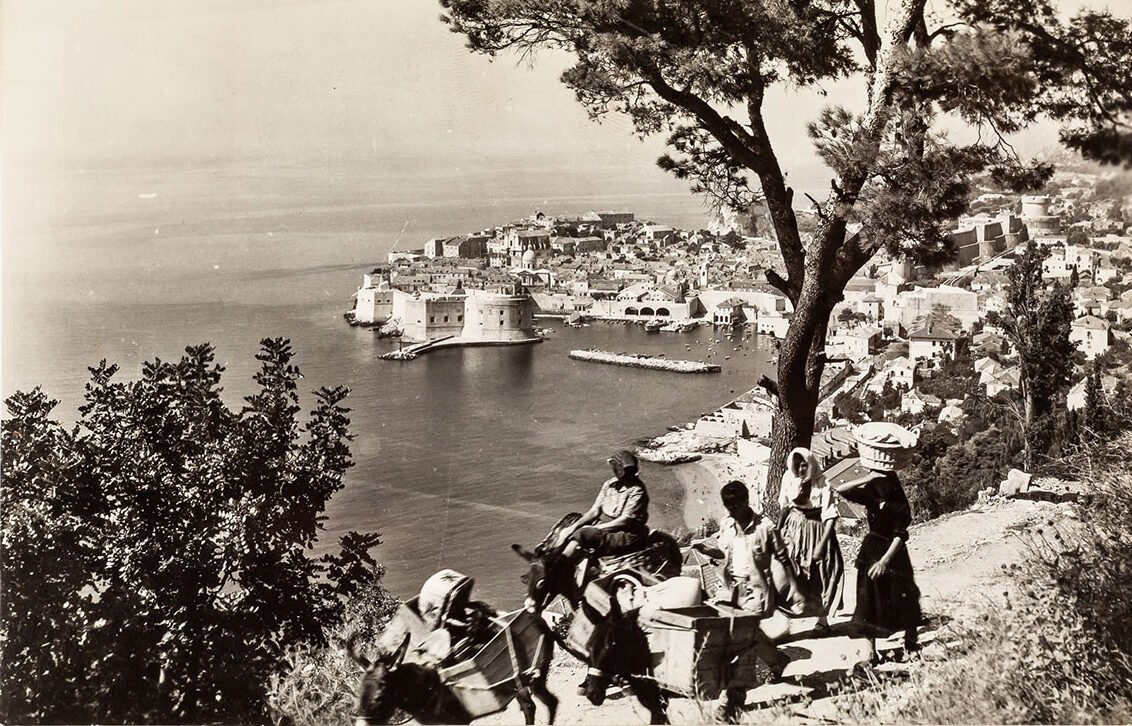
The Remarkable Story of Dubrovnik and the Republic of Ragusa
The Remarkable Story of the Republic of Ragusa
Long before Dubrovnik became a place people travelled to see, it was a place the world travelled through.
Ships arrived carrying goods from distant ports. Merchants crossed the Adriatic, diplomats travelled between powerful courts and news from across the Mediterranean passed through the city gates.
Behind the stone walls stood a remarkably small republic with remarkably large ambitions.
Dubrovnik had no vast territory and no great army.
Instead, it learned to survive through trade, diplomacy and an extraordinary understanding of the world around it.
A City That Valued Freedom
For centuries, one idea stood above almost everything else in Dubrovnik.
Freedom.
The Republic of Ragusa, as Dubrovnik was known internationally, developed into an independent maritime republic whose identity was closely tied to Libertas — liberty.
Surrounded by much larger powers, its position was never guaranteed.
Yet Dubrovnik became remarkably skilled at protecting its independence, negotiating carefully with kingdoms and empires while maintaining its own institutions, laws and way of life.
Freedom here was not simply an ideal.
It was something that had to be protected every day.
Diplomacy Instead of Armies
Dubrovnik understood its limitations.
It could not compete with the great military powers surrounding the Adriatic and Mediterranean. So it developed another kind of strength.
Diplomacy.
Its representatives travelled throughout Europe, while merchants created connections stretching far beyond the city walls. Agreements, information and carefully maintained relationships became some of the Republic’s most valuable tools.
This ability to speak to different worlds allowed a tiny state on the Adriatic to prosper for centuries.
Dubrovnik survived not because it was powerful enough to dominate its neighbours, but because it became exceptionally good at understanding them.
When Dubrovnik Looked Out to Sea
The sea was never simply a beautiful view.
It was Dubrovnik’s connection to the world. Merchant ships carried goods between Mediterranean ports while Dubrovnik’s traders established networks across southeastern Europe and beyond. Salt, textiles, agricultural products, metals and countless other goods passed through their hands.
The harbour was a place of constant movement.
Sailors arrived with stories from distant cities. Merchants negotiated prices. Ships were repaired, loaded and prepared to leave again.
For generations, the horizon represented opportunity.
The same Adriatic that visitors admire today was once the foundation of Dubrovnik’s prosperity.
A Republic That Feared Too Much Power
Even the person chosen to lead Dubrovnik was not allowed to become too powerful.
The Rector — or knez — served for only one month.
During that brief period, he lived in the Rector’s Palace, surrounded by the institutions of government rather than ruling from a private residence. Above one of its entrances remains an inscription reminding those in government to put public affairs before their private concerns.
It reveals something important about the Republic.
Dubrovnik’s leaders understood that preserving the state mattered more than the ambitions of any single individual.
Ahead of Its Time
Some of the most fascinating parts of Dubrovnik’s history are not found on battlefields.
They are found in the decisions made about everyday life.
In 1377, the Republic introduced a system requiring people arriving from plague-affected areas to spend a period in isolation before entering Dubrovnik.
It became one of the earliest organised quarantine systems in the world.
The idea was remarkably practical.
Dubrovnik depended on international trade and could not simply close itself to ships, merchants and travellers.
Instead, it found a way to protect public health while keeping the city connected to the outside world.
Centuries later, the Lazareti near the eastern entrance to the Old Town still tell part of that story.
Life Beyond the City Walls
The Republic was more than the city we know today.
Its territory extended along the coast and across islands and fertile countryside, including places that remain an essential part of the Dubrovnik region.
Konavle provided valuable agricultural land. Pelješac became an important part of the Republic, while Mljet, Lastovo and the Elafiti Islands formed part of a wider territory connected to Dubrovnik economically and politically.
Beyond the city walls were vineyards, olive groves, stone villages, summer residences and working landscapes.
This was the quieter side of the Republic.
While merchants and diplomats looked outward toward the world, generations of families continued to work the land that sustained life closer to home.
The Morning That Changed Dubrovnik
On 6 April 1667, Dubrovnik changed forever.
A devastating earthquake struck the city, followed by fire.
Buildings collapsed, lives were lost and much of the city was reduced to ruins. The disaster was so severe that it threatened not only Dubrovnik itself, but the survival of the Republic.
Yet the city was rebuilt.
The Dubrovnik visitors walk through today is therefore not simply a preserved historic city. It is also a city shaped by recovery.
Behind its harmonious stone façades is the story of a community that rebuilt itself while trying to preserve the independence it had protected for centuries.
The End of the Republic
The Republic survived the earthquake.
It survived shifting alliances, changing trade routes and centuries of pressure from more powerful neighbours.
But it could not survive the transformation of Europe during the Napoleonic era.
In 1808, the Republic of Ragusa was formally abolished.
After centuries of independence, Dubrovnik was no longer a republic.
Its flag disappeared from the institutions it had governed.
But its identity did not disappear with it.
The Republic Is Gone. Its Character Is Not.
Walk through Dubrovnik today and its past is never very far away.
It is there in the Rector’s Palace and the old harbour.
In the walls built to protect a small but determined city.
In the Lazareti that recall a remarkably early approach to public health.
And beyond the Old Town, it continues through stone villages, old estates, vineyards, olive groves and landscapes that once formed part of the world of the Republic.
Millions of people now come to Dubrovnik because it is beautiful. But beauty alone does not explain the city.
To understand Dubrovnik is to understand how a small place learned to think beyond its size — trading instead of conquering, negotiating instead of threatening and placing freedom at the centre of its identity.
Long before Dubrovnik became a destination, it had already spent centuries finding its place in the world.
Leave a Reply